
El estadounidense Xavier Cortada visitó Valparaíso para contar de su trabajo gráfico de tres décadas para concientizar en temas como la crisis hídrica, abriendo la posibilidad de contar con uno de sus murales participativos en la ciudad.
“DEL ÁRTICO A LA ANTÁRTIDA: ARTE Y CIENCIA EN ACCIÓN CLIMÁTICA”, FUE EL TEMA QUE EL ARTISTA EXPUSO EN EVENTO EN LA PUCV.
SCROLL DOWN FOR ENGLISH TRANSLATION
El Mercurio
By Marcelo Macellari C.
December 22, 2024
El artista y activista ambiental estadounidense Xavier Cortada participó del Encuentro Nacional de Comunicación de la Ciencia en Valparaíso, abriendo la posibilidad de contar con uno de sus murales participativos en la ciudad.
Desde el Ártico hasta la Antártida y Florida. Durante tres décadas el artista y activista ambiental Xavier Cortada, quien vincula la investigación científica con la acción pública, utilizando el arte socialmente para conectar las ciencias con la comunidad, ha inspirado acciones y reflexiones en torno a la conservación y a la ideación de soluciones colectivas.
“El arte puede servir como una herramienta poderosa para inspirar el cuidado ambiental y comprometer a las comunidades en la acción climática. Mi objetivo es fomentar un diálogo sobre el papel crítico de la colaboración interdisciplinaria para enfrentar los desafíos ambientales actuales”, señala el ecoartista, quien visitó esta semana el Puerto para participar como orador principal en la apertura del Encuentro Nacional de Comunicación de la Ciencia en Valparaíso.
En su presentación en la PUCV, el artista estadounidense ofreció la charla “Del Ártico a la Antártida: Arte y Ciencia en Acción Climática”, donde exploró cómo el arte y la ciencia convergen para abordar desafíos ambientales globales urgentes, como el cambio climático, la pérdida de biodiversidad y el aumento del nivel del mar.
Al ser consultado sobre la escasez de agua en la región y las recomendaciones para enfrentarla de mejor forma, Cortada indica que “la crisis hídrica en la Región de Valparaíso es un problema que requiere soluciones integrales, que no solo aborden la eficiencia en el uso del agua, sino que también fomenten un cambio cultural hacia la sostenibilidad hídrica. Recomendaría que los museos locales se conviertan en catalizadores de este cambio, invitando a artistas locales a colaborar con expertos y practicantes en talleres comunitarios.
Estos talleres podrían enfocarse en utilizar el arte como una herramienta para que la comunidad comprenda la profundidad del problema y explore soluciones prácticas. El arte tiene la capacidad de conectar emocionalmente, de desarmar resistencias y de inspirar a las personas a reflexionar sobre su impacto en el entorno. A través de procesos participativos, los artistas pueden crear experiencias que ayuden a la comunidad a visualizar la magnitud de la crisis hídrica y a imaginar un futuro más sostenible”.
“Es esencial –agrega- que estas iniciativas cuenten con financiamiento adecuado y estructuras de apoyo para garantizar su éxito. Los museos y otras instituciones culturales pueden desempeñar un papel clave como espacios de encuentro que convocan y respaldan estos esfuerzos. Además, abordar problemas como la crisis hídrica, que a menudo se racionalizan o posponen frente a otros temas aparentemente más urgentes, requiere un enfoque que priorice la evaluación comunitaria, el entendimiento colectivo, el compromiso y la aceptación. Al colaborar con instituciones que tienen la capacidad de reunir recursos y facilitar el diálogo, los artistas pueden servir como puentes entre la comunidad y las soluciones necesarias, utilizando su arte para fomentar la participación activa y el cambio sostenible en la región”.
Gran Lienzo Colectivo
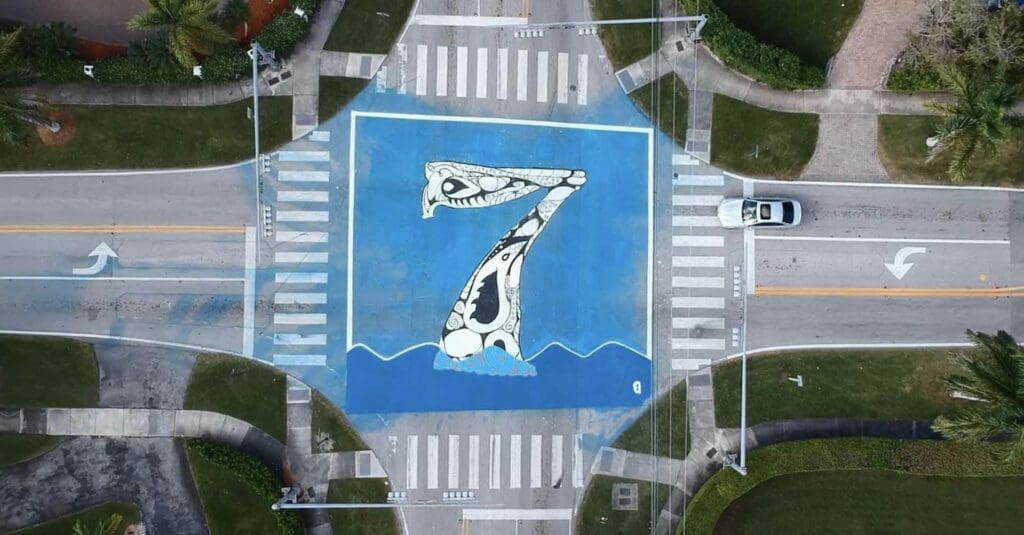
El artista, quien creó una organización sin fines de lucro, la Cortada Foundation, para hacer crecer y promover su práctica social, sostiene que “mi viaje a Chile es una forma de invitar a más personas a sumarse a esta labor, a contribuir en la pintura de este gran lienzo colectivo que busca un futuro más humano, creativo y sostenible para todos”. El trabajo que realiza con su fundación, a través de The Underwater Project, atraviesa seis continentes, con más de 150 obras de arte públicas, instalaciones, murales colaborativos, restauración ecológica de terrenos y proyectos con compromiso social.
Sobre la posibilidad de contar con un mural del proyecto en Valparaíso, Cortada -quien realizó un taller de arte ambiental en el Museo Artequin de Viña del Mar- indica que “el tiempo de esta visita es demasiado limitado para planificar y crear un mural. Sin embargo, tengo la intención de interactuar con la comunidad local para explorar la posibilidad de implementar el proyecto Underwater, siempre y cuando podamos coordinarlo con los anfitriones locales. Este proyecto busca involucrar a la comunidad en un diálogo significativo sobre el impacto del cambio climático, específicamente en relación con el aumento del nivel del mar, y podría ser una oportunidad para generar conciencia y acción en el contexto local”.
See original article at https://www.elmercurio.com/blogs/2024/12/23/121721/encuentro.aspx

CORTADA HA REALIZADO MÁS DE 150 OBRAS DE ARTE PÚBLICAS.


ENGLISH TRANSLATION
The American artist and environmental activist Xavier Cortada participated in the National Meeting of Science Communication in Valparaíso, opening the possibility of bringing one of his participatory murals to the city.
From the Arctic to Antarctica and Florida, over three decades, artist and environmental activist Xavier Cortada has been connecting scientific research with public action, using art as a social tool to link science with the community. He has inspired actions and reflections on conservation and the creation of collective solutions.
“Art can serve as a powerful tool to inspire environmental stewardship and engage communities in climate action. My goal is to foster a dialogue about the critical role of interdisciplinary collaboration in addressing today’s environmental challenges,” said the eco-artist, who visited Valparaíso this week to participate as the keynote speaker at the opening of the National Meeting of Science Communication.
In his presentation at the Pontificia Universidad Católica de Valparaíso (PUCV), the American artist delivered the talk “From the Arctic to Antarctica: Art and Science in Climate Action”, where he explored how art and science converge to tackle urgent global environmental challenges, such as climate change, biodiversity loss, and rising sea levels.
When asked about the region’s water scarcity and recommendations to address it, Cortada stated, “The water crisis in the Valparaíso Region is a problem that requires comprehensive solutions, not only addressing water use efficiency but also fostering a cultural shift towards water sustainability. I would recommend that local museums become catalysts for this change, inviting local artists to collaborate with experts and practitioners in community workshops.”
These workshops, Cortada explained, could focus on using art as a tool for the community to understand the depth of the problem and explore practical solutions. “Art has the capacity to connect emotionally, break down resistance, and inspire people to reflect on their impact on the environment. Through participatory processes, artists can create experiences that help communities visualize the magnitude of the water crisis and imagine a better future.”
“It is essential,” he added, “that these initiatives have adequate funding and support structures to ensure their success. Museums and other cultural institutions can play a key role as gathering spaces that convene and support these efforts. Addressing issues like the water crisis, which are often rationalized or postponed in the face of seemingly more urgent matters, requires a community-focused approach that prioritizes collective understanding, commitment, and acceptance. By collaborating with institutions that have the resources to facilitate dialogue, artists can act as bridges between the community and necessary solutions, using their art to encourage active participation and meaningful change in the region.”
A Collective Canvas
The artist, who founded the nonprofit Cortada Foundation to expand and promote his social practice, stated, “My trip to Chile is an invitation for more people to join this work, contributing to the painting of this collective canvas that seeks a more humane, creative, and sustainable future for all.” Through The Underwater Project, his foundation’s work spans six continents, including over 150 public artworks, installations, collaborative murals, ecological land restoration projects, and socially engaged initiatives.
Regarding the possibility of bringing a mural from this project to Valparaíso, Cortada—who conducted an environmental art workshop at the Artequin Museum in Viña del Mar—remarked, “The time available during this visit is too limited to plan and create a mural. However, I intend to interact with the local community to explore the possibility of implementing The Underwater Project, provided we can coordinate it with local hosts. This project seeks to involve the community in a meaningful dialogue about the impact of climate change, particularly regarding rising sea levels, and could provide an opportunity to generate awareness and action in the local context.”